Build A Boat For Treasure drops you onto a floating build plot with nothing but a starter block kit and a river that wants to break your hull before you reach the treasure vault. Most first-day crews sink on their third launch, not because the river is unfair, but because they skip the sealing step, misplace their thrusters, and walk into the current without a plan. A practical Build A Boat For Treasure beginner guide changes that fast: learn the material tiers, build a sealed hull, place your thrusters and seats in a balanced layout, and treat the first run as a paid scouting mission rather than a gold sprint.
The game itself has been live since November 2, 2016, and as of September 24, 2026 it sits at 5.2 billion-plus visits, 8.5 million favorites, a 93 percent like rating, and roughly 14,600 concurrent players, so the river is always populated and the loot tables are always active. Every server holds up to 7 players per boat, which means even a brand-new sailor can crew up and learn the loop in a single run. The rest of this guide breaks down the loop, the blocks, the boat blueprint, the river hazards, and the gold math so your second run makes more than your first.
Understanding The Build-Lauch-Loot Loop
Before touching a single block, it helps to understand the three-stage rhythm that every run follows: gather at the plot, build a sealed boat, launch and survive the river, then collect gold at the treasure vault. According to the Build A Boat For Treasure Roblox game page, players gather wood, stone, and metal at the build plot, assemble a sealed hull with room for thrusters, seats, and cannons, then launch downstream. Along the river you dodge rocks, whirlpools, and stage hazards, harvest materials, and push for the treasure vault at the end to collect gold and rare blocks before rebuilding smarter for the next run. Solo crews and full 7-player squads share the same launch-to-loot cycle, so the loop does not change whether you play alone or with friends.
The Three Stages In One Run
Each run has a strict phase order, and breaking any single phase usually costs you the run. The table below summarizes the three stages, what you do in each, and what the typical reward looks like for a new sailor.
| Stage | Where You Are | Core Action | Typical Reward (First Few Runs) |
|---|---|---|---|
| Gather | Build plot (safe island) | Mine wood, stone, and metal from deposit nodes | 80-200 starter blocks, basic materials |
| Build | Build plot (safe island) | Assemble a sealed hull with seats, thrusters, and weight balance | A river-ready boat |
| Run | River + treasure vault | Survive hazards, harvest mid-river nodes, open the vault | 200-1,500 gold, occasional rare drops |
Why The Loop Rewards Smart Rebuilds
The treasure vault at the end of the run pays out a flat gold bonus plus whatever rare blocks you pulled from chests during the river. The smarter your boat, the more gold you keep, because a broken hull dumps most of its gold into the river along with the broken blocks. This is why the meta strategy is not to build one perfect boat, but to spend your first 3-5 runs learning the river, then commit to a "money boat" build that you can repeat and upgrade run after run.
Gathering Starter Materials Without Wasting Time
Your first hour in the game is mostly spent at the build plot, clicking on deposit nodes and watching your inventory fill up. The starter deposit nodes are color-coded so you always know what you are mining. Wood nodes give you Wood Planks, the cheapest structural block in the game, while stone nodes drop Stone Bricks, which are heavier and stronger. Metal nodes unlock once you have at least one completed run, and they drop Metal Sheets, which weigh more but seal far better than wood because of their tighter hitbox.
Material Tier Snapshot
Material choice is the single biggest lever you have over your boat's durability, and it scales sharply with the block tier. The numbers below are community-reported averages collected from the Build a Boat for Treasure leaderboard scene and testing discords, so treat them as planning estimates rather than exact guarantees — server-side hit calculations and rebuild multipliers can shift your effective cost per run by 20-40% depending on your thruster placement and how aggressively you farm gold on earlier floors.
| Material | Weight Per Block | Durability Tier | Cost Per Block (Gold) | Best Use On Day One |
|---|---|---|---|---|
| Wood Plank | Very light | Low | 1-3 | Practice hull, learning thruster placement |
| Stone Brick | Medium | Medium | 5-12 | Mid-hull core, side walls |
| Metal Sheet | Heavy | High | 25-60 | Outer hull skin, waterline, and sealing layer |
| Marble | Heavy | High | 80-150 | Aesthetic interior, late-game cabins |
| Obsidian / Adamantite | Very heavy | Very high | 500-2,000+ | Endgame "money boat" builds |
A common rookie mistake is to spend the entire first run on Wood Plank, because wood is cheap and you can place it fast. The problem is that wood splinters after the first rock collision, and once a single block on the waterline breaks, the whole boat starts leaking speed and the hull usually collapses within thirty seconds. Reserve wood for the inner frame and any practice runs, and shift to at least Stone Brick for the waterline by your second or third run.
Material Efficiency Rules
Three efficiency rules keep your inventory from running dry mid-river, and beginners in any build a boat for treasure how to play session learn them the hard way after their first hull sinks because they ran out of metal plating during a gold-rush run. The rules below cut your trip count to the mining islands by roughly 30–40% once you stop over-farming wood for cosmetic cabins and start prioritizing the rare nodes that actually respawn. Treating them as a fixed checklist — not optional suggestions — is what separates crews crossing the finish line on gold from those floating back to the plot with half a boat built.
-
Mine in priority order: Metal first, stone second, wood last. Metal nodes respawn slowly, so claim them before the other crews on the server do.
-
Carry only what you need: A full 1,200-block inventory slows you down on the build plot. Drop excess wood onto a storage chest near the plot.
-
Upgrade before scaling: Get one full metal-skinned hull running before you start adding cannons, balloons, or decorative cabins.
Building Your First Sealed Hull
The biggest reason a beginner boat sinks is not bad luck, it is a broken seal. A "sealed hull" means the boat is fully enclosed at the waterline, so water cannot get in from the sides or bottom. Community testing on hull design confirms that even a single missing block on the bottom row lets water rush in during the first whirlpool, and once the waterline rises past the seats, the boat loses buoyancy and breaks apart. Treat sealing as the #1 priority of your first run.
The Three-Layer Hull Pattern
The cleanest beginner blueprint is a three-layer hull: a wooden inner frame, a stone mid-hull, and a metal skin on the waterline. The table below shows the layer order, what each layer does, and roughly how many blocks you need for a 6-seat starter boat.
| Layer | Material | Block Count (6-Seat Boat) | Purpose |
|---|---|---|---|
| Inner frame | Wood Plank | 80-150 | Shape and interior layout |
| Mid-hull | Stone Brick | 120-220 | Core strength, waterline support |
| Skin (waterline) | Metal Sheet | 60-120 | Sealing and collision resistance |
| Total | — | 260-490 blocks | Fits a starter inventory |
The shape that works best for a first boat is a long, low rectangle with a slight upward slope at the bow, because flat-bottomed boats get caught on rocks and tall boats catch wind and tip over. Keep the height to no more than 3 blocks above the seats, and keep the length to about 8-12 blocks, which is long enough to be stable and short enough to steer with two thrusters.
Sealing Checklist Before You Launch
Before you click "Launch," walk the inside of the hull and check every surface from the inside out, because Build A Boat For Treasure registers leaks the instant any water tile touches an unfilled block gap, which is why the first few seconds of a run are almost always lost to rookie oversights rather than enemy fire. Run this pre-launch pass in a fixed order — bottom row, side walls, bow slope, then waterline ring — so the checklist becomes muscle memory by run ten and you stop wasting gold on rebuilds caused by a single missing corner block.
-
Bottom row: Zero gaps. The bottom is where rocks hit first, so it must be 100% solid.
-
Side walls: Continuous from bow to stern. Even a one-block gap sinks the boat within seconds.
-
Bow slope: Angled upward by at least 2 blocks. A flat bow eats rocks face-on.
-
Waterline ring: One block of metal (or stronger) wrapping the entire outside of the hull at seat level.
-
No floating accessories above seats: Cannons, balloons, and decorative blocks add weight at the top and flip the boat.
If you want a more advanced sealed-hull blueprint, the Build A Boat For Treasure complete guide walks through cannon placements, balloon lift, and adamantite-tier hulls for crews that have outgrown the starter metal-skin approach. The extended blueprint adds cannon placement, seat spacing, and a weight checklist you can copy block-for-block before touching the launch button.
Placing Thrusters, Seats, And Weight
Once the hull is sealed, the next decision is where to put the thrusters, seats, and any other moving parts. A boat with perfect sealing but bad thruster placement will still spin in circles, crash into every rock, and never reach the treasure vault. The general rule from community testing is that a boat needs at least one thruster per 50 blocks of hull, and the thrusters need to be placed in pairs facing opposite directions so the boat can reverse out of trouble.
Thruster Placement Grid
Beginners building their first boat in Build a Boat for Treasure should match thruster count to hull size in fixed ratios: a 100-180 block solo scout needs just 1 forward and 1 reverse thruster, while a 500-800 block 7-player crew requires 3 forward plus 2 reverse thrusters arranged in a stern triangle to counter recoil from multi-cannon gold runs. Each ratio in the grid below reflects tested minimums from the workshop that balance speed, turn radius, and seat capacity for safe treasure hauling.
| Hull Size | Block Count | Thrusters Needed | Seats Needed | Recommended Layout |
|---|---|---|---|---|
| Solo scout | 100-180 | 1 forward + 1 reverse | 1-2 | Single seat, center, paired thrusters at stern |
| Pair crew | 200-300 | 2 forward + 1 reverse | 2-3 | Two seats side-by-side, thrusters on rear corners |
| Squad boat (4-5) | 300-500 | 2 forward + 2 reverse | 4-5 | Seats in a row, thrusters on each rear corner |
| Full 7-player crew | 500-800 | 3 forward + 2 reverse | 7 | Three thrusters in a triangle at the stern, two seats per row |
Weight Balance Rules
Boats tip over when the weight is uneven, and there is no auto-balance button. In Build A Boat For Treasure, every block you place shifts the boat's center of mass, and the water physics punish lopsided hulls by capsizing them in seconds — even a single heavy block perched on the upper deck can drag that side underwater. Three rules prevent tipping:
-
Place heavy blocks low: Metal, stone, and adamantite belong in the bottom two layers.
-
Place balloons and cannons high and centered: A single off-center balloon at the bow will flip the boat within ten seconds.
-
Test-launch before committing: Drop the boat into the test water near the build plot and watch how it sits. If it leans, redistribute weight before launching into the real river.
For more on thruster configurations and on solo-versus-squad steering patterns, the Build A Boat For Treasure steering guide goes deeper on triangle thrusters, diagonal thrust, and crew-role setups for squads. That guide also covers solo-versus-squad steering patterns, which change how much correction thrust you need once hulls take hits mid-river.
Surviving The River And Reaching The Treasure Vault
The river is the part of the game where most of the gold actually lives, and it is also where most first-time crews lose everything. Hazards come in waves, and each wave has its own pattern. The first stretch is a calm tutorial section with a few floating crates; the middle stretch adds whirlpools, rock walls, and cannon turrets on the cliffs; the final stretch is a long, fast chute that ends at the treasure vault.
River Stage Breakdown
| Stage | Length | Main Hazards | Loot Opportunity | Survival Tip |
|---|---|---|---|---|
| Tutorial stretch | 30-60 seconds | Floating debris, minor rocks | Crates with wood and stone | Use this stretch to test thruster responsiveness |
| Canyon section | 60-90 seconds | Whirlpools, rock pillars, cliff cannons | Metal nodes, rare crate spawns | Steer toward the center, avoid walls |
| Chute finale | 30-45 seconds | Fast current, tight turns, breakable bridges | Treasure vault at the end | Stop steering, hold reverse, let the current carry you straight in |
The most common mistake in the canyon section is steering into the walls while chasing a metal node, because the cliff cannons target anything that lingers near the wall. Stay in the center of the river, grab nodes with a side-swing rather than a hard turn, and let the thrusters do the work. In the chute finale, the river moves so fast that the boat can outrun the steering inputs, which is why the meta strategy is to set the thrusters straight and tap reverse only to nudge around the worst obstacles.
Harvesting Mid-River Without Wrecking
Mid-river nodes give the best materials, but they are placed in spots that pull boats off course. The trick is to approach at a 30-degree angle, harvest the node in one pass, and immediately swing back toward the center. Do not stop the boat to harvest, because a stopped boat is a sitting target for both the current and the cliff cannons. Players who consistently clear the river with full cargo usually run a slightly wider hull (around 10-12 blocks) so the side-swing harvest does not tip the boat.
Gold Math: How To Get Gold On Day One
The whole point of the build-launch-loot loop is to walk out of the treasure vault with more gold than you walked in with. Gold comes from three sources: the flat run bonus at the end of a successful run, the value of the rare blocks you harvested, and the contents of the treasure chest that sometimes spawns inside the vault. A practical Build A Boat For Treasure how to get gold mindset is to treat every run as a small business decision: spend less, return more, reinvest the profit into a better hull.
Typical Gold Earnings Per Run (Beginner Tier)
The figures in the table below are community-reported averages for a first-time captain working through their opening ten runs, using a metal-skin hull paired with a 4–5 seat layout to balance durability against crew capacity. Individual outcomes swing widely depending on how many treasure chests you snag at the end-of-run checkpoint, how often your boat breaks apart mid-voyage, and whether the bonus treasure event triggers. Treat the gold and repair costs as rough anchors rather than guaranteed payouts, since lava encounters, enemy cannon fire, and the auto-rebuild mechanic all drag net profit up or down run to run.
| Run Type | Avg Gold Earned | Avg Cost Of Repair | Net Profit | Notes |
|---|---|---|---|---|
| First run (wood hull) | 200-400 | 50-150 | 50-250 | Learning run, expected to break |
| Second run (mixed hull) | 400-800 | 100-250 | 150-550 | First real profit |
| Third run (metal hull) | 800-1,500 | 50-150 | 650-1,350 | Repeatable money boat |
| Bonus treasure chest | +500-2,000 | 0 | +500-2,000 | Roughly 1 in 5 runs, based on community data |
Where The Big Gold Lives
If you want to push past the beginner tier, the gold-per-run ceiling is reached by farming mid-river metal nodes, opening every crate that spawns on the river, and rolling the bonus chest every run. The official game page confirms that the rare endgame materials include obsidian, adamantite, and mosaic, and the Legendary Chest Block drops at a community-reported 1/1,000 rate from Legendary Chests, which is why a single lucky pull can fund ten full runs of upgrades. For a dedicated gold-farming route, the Build A Boat For Treasure how to get gold fast breakdown covers AFK farms, side-route paths, and the best gold-per-block ratios.
Beginner Mistakes That Drain Your Wallet
Even with a sealed hull and a balanced thruster layout, a few recurring mistakes will silently drain your gold. The list below is the short version of the Build A Boat For Treasure tips and tricks that experienced crews always share with newcomers, and skipping any of them is the difference between a profitable run and a sunk boat.
-
Over-building the first boat: A 1,200-block monstrosity on run one guarantees a sunk boat, because you cannot afford the repair cost. Stay under 500 blocks until you have the gold for a real money boat.
-
Forgetting to seal the bottom: A perfect top with a single missing bottom block still sinks in the first whirlpool.
-
Placing cannons too early: Cannons are heavy, they are placed high by default, and they will flip the boat. Add cannons only after the hull has proven stable in the test water.
-
Ignoring the test water: The build plot has a small test pond for a reason. A 10-second test-launch saves 10 minutes of repair work.
-
Chasing every crate: Mid-river crates are tempting, but veering into a wall to grab one is how most first-week crews lose their hull.
Quick Reference Table: Run Type Vs. Strategy
| Player Goal | Best Run Strategy | Expected Gold / Hour |
|---|---|---|
| Learn the loop | Wood hull, solo scout, no extras | 200-500 |
| Steady money boat | Metal-skin 4-seat, mid-river harvesting | 1,500-3,000 |
| Rare block hunting | Squad boat, canyon route, full crate sweep | 2,500-6,000 (high variance) |
| AFK farming | Simple wide hull on a calm stretch | 500-1,200 |
Beyond Day One: What To Unlock Next
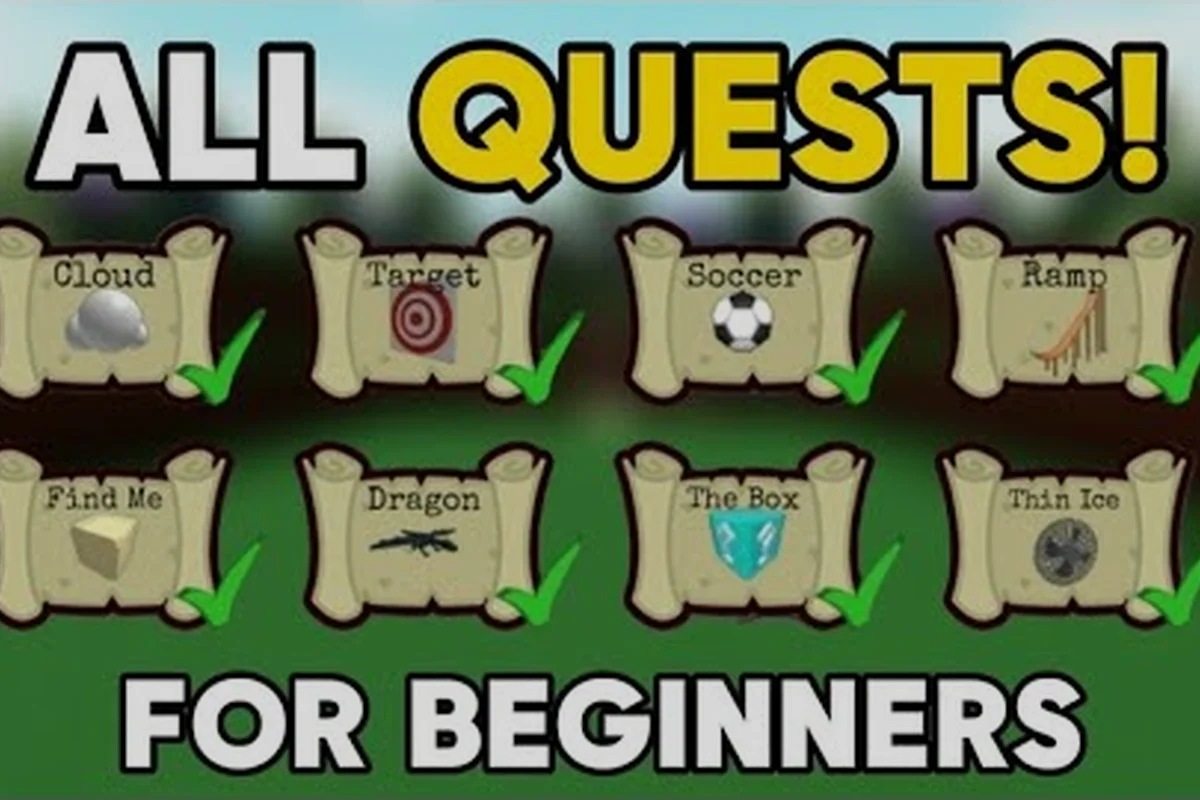
Once the starter loop is paying for itself, the game opens up in three directions: side quests, badges, and rare block farming. Side quests pay gold for completing simple tasks like "reach the treasure vault with 3 crates," and they reset on a timer, so they are a reliable passive income source. Badges are one-time achievements that unlock cosmetic and block rewards, and they are worth completing on your first squad boat because the rewards compound across runs. For a focused walkthrough of which side quests to prioritize first, the Build A Boat For Treasure side quests ordering guide lays out the quest chain from tutorial to advanced challenges.
Badge Priorities For New Sailors
| Badge Tier | Difficulty | Typical Reward | Recommendation |
|---|---|---|---|
| Bronze (starter) | Easy | Decorative block, small gold | Complete all of these by run 5 |
| Silver (intermediate) | Medium | Rare block, mid gold | Tackle after the first money boat |
| Gold (advanced) | Hard | Cosmetic, large gold | Squad-only, requires a 7-player crew |
| Secret badges | Hidden | Event-block, unique cosmetic | Check the badge list every patch |
For a full badge roadmap that includes the flying-machine badge and the raft-survival badge, the Build A Boat For Treasure how to get all badges walkthrough maps each badge to the boat build that makes it easiest to clear. Both badge lines reward the same early habits, so the roadmap slots naturally into voyages you are already running.
Frequently Asked Questions
How do I play Build A Boat For Treasure as a complete beginner?
Spend your first run learning the loop, not chasing gold. Mine wood and stone at the build plot, build a small 200-300 block sealed hull, add one thruster forward and one reverse, then launch and try to reach the treasure vault. Expect to sink on run one, because the goal is to learn the river hazards, not to set a profit record.
What is the fastest way to build a working boat in the game?
Use a simple three-layer pattern: a wood inner frame, a stone mid-hull, and a metal skin on the waterline. Keep the hull under 500 blocks, place thrusters at the rear corners in pairs, and run the test water before launching. This blueprint can be built in 10-15 minutes once you have done it two or three times.
How do I get more gold from each run?
The biggest gold lever is a metal-skin hull with at least one mid-river metal harvest, which raises the average run payout to 800-1,500 gold. Pair that with a 4-5 seat layout, side-swing harvesting in the canyon section, and a steady supply of metal sheets, and the per-run profit climbs fast. Treat rare blocks as a bonus, not a plan.
What are the most important Build A Boat For Treasure tips and tricks for new players?
Seal the bottom first, place thrusters in pairs, keep weight low, and test-launch before every real run. Those four rules cover about 80% of the mistakes new players make. The other 20% comes from learning the river itself, which is why the first three runs are best treated as paid scouting missions rather than gold sprints.
Can I play Build A Boat For Treasure with friends on day one?
Yes, and it is highly recommended. The game supports up to 7 players per boat, and a 4-player squad is the sweet spot for learning the loop, because each player can handle a job: one steers, one watches for hazards, one harvests mid-river, and one manages repairs. Squads also clear the canyon section faster and split the repair cost across the crew, which raises the per-player profit on every run.